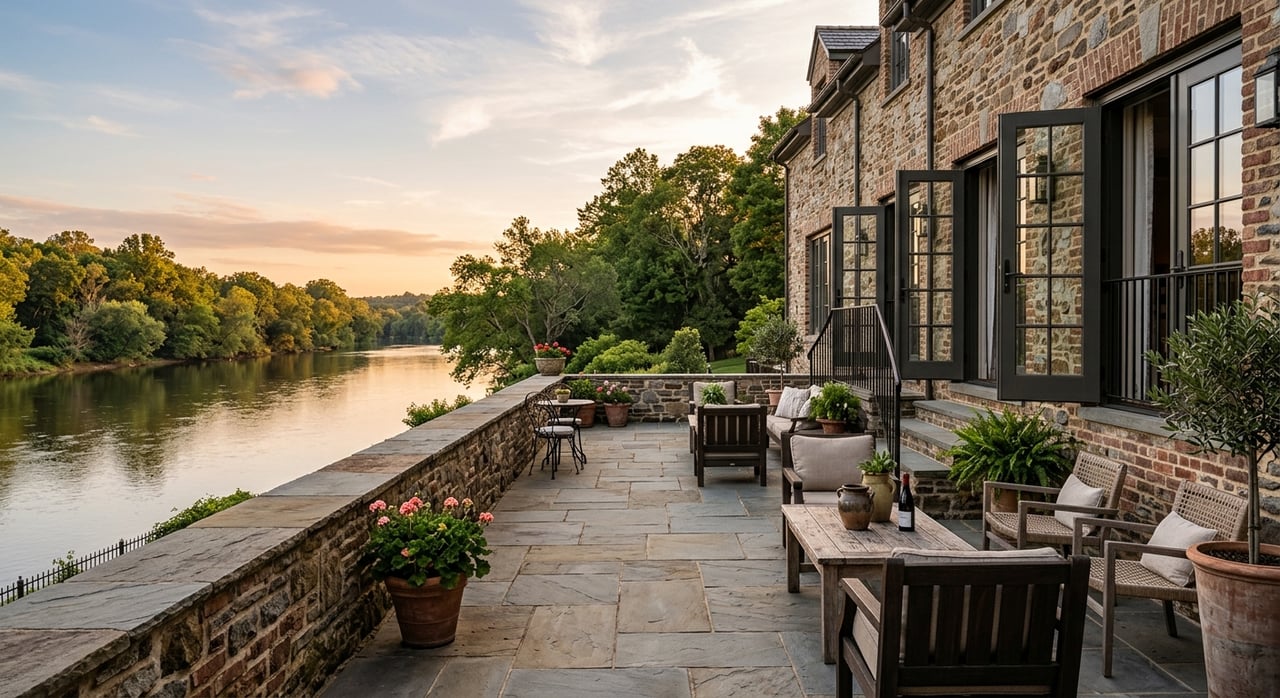
If you are drawn to places where daily life feels a little more grounded, Washington Crossing offers a rare mix of river scenery, open space, and living history. You may be looking for a home that feels tucked away without feeling cut off, or a Bucks County setting that offers beauty beyond the property line. In Washington Crossing, the Delaware River, the canal, and the surrounding parkland shape the experience in a very real way. Let’s take a closer look.
A River Setting That Shapes Daily Life
Life along the Delaware in Washington Crossing is defined first by place. This is not simply a historic name on a map. It is a riverfront setting in Upper Makefield Township where the landscape, village character, and preserved open space remain part of everyday life.
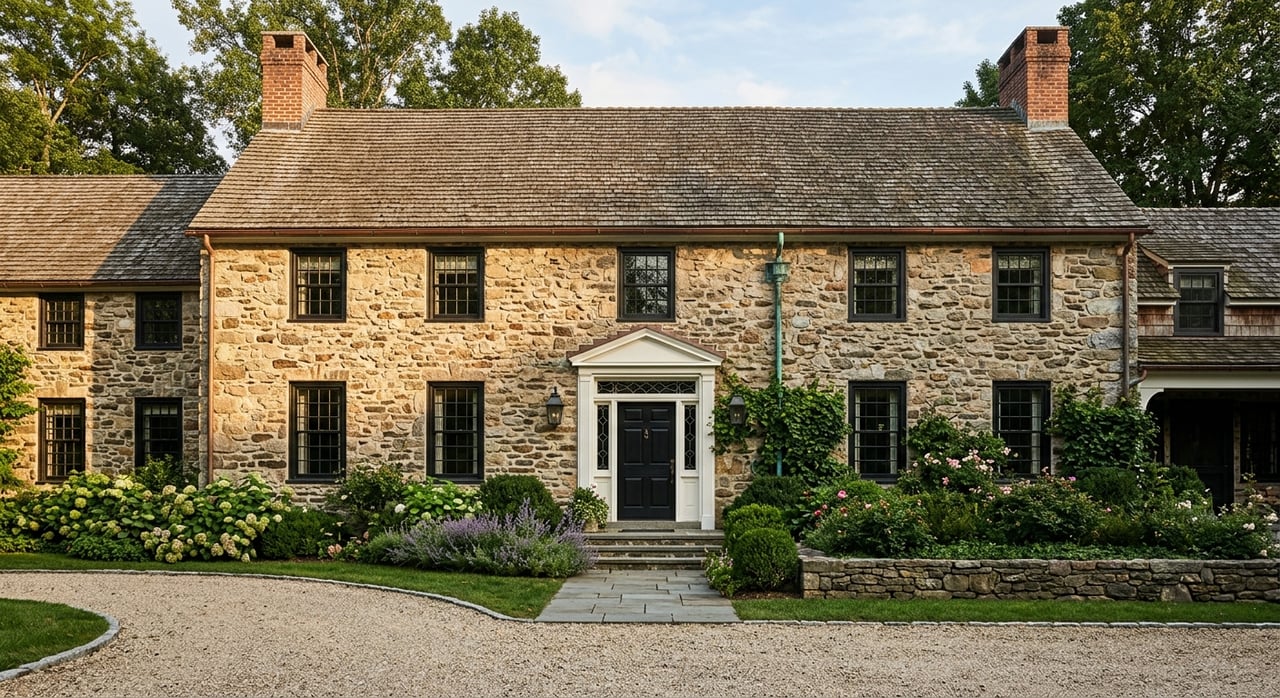
The area reflects both heritage and practicality. Upper Makefield describes its built environment as a mix of 18th- and 19th-century homes along with newer styles, and it also notes the township functions as a modern residential community for people working in Pennsylvania, New Jersey, and New York. That combination helps explain why Washington Crossing feels established, scenic, and livable rather than purely visitor-oriented.
Washington Crossing Historic Park as an Amenity
One of the biggest advantages of this location is the presence of Washington Crossing Historic Park. The park spans more than 500 acres and includes historic buildings, walking paths, picnic pavilions, fishing areas, non-motorized boat launching, and outdoor education programs. For residents, that means the landscape around you is not just preserved, but also actively used and enjoyed.
Much of the park is open every day of the year from sunrise to sunset. Some features are free, while others operated by the Friends of Washington Crossing may charge a fee. Even so, the park functions as a regular part of local life, not just as a once-a-year destination.
Upper and Lower Park Experiences
The park is organized into upper and lower sections, which gives it a broader feel than many single-site destinations. You can spend time near historic village areas, then shift easily to open grounds, trails, and river views. That variety adds depth to the experience of living nearby.
Bowman’s Hill Tower is another notable feature in the upper section. From the tower, visitors can see as far as 14 miles across the Delaware River area. It is the kind of landmark that reinforces how visually connected this community is to the surrounding landscape.
The Delaware Canal Adds Everyday Access
For many buyers, the canal is just as meaningful as the river itself. About 5.7 miles of the Delaware Canal run through Upper Makefield Township, and the towpath is a favorite route for pedestrians and bicyclists. It gives residents a simple, scenic way to move through the area at a slower pace.
The Delaware Canal Towpath extends 59 miles and is ADA-accessible. It includes mile markers and trailhead amenities such as restrooms, potable water, benches, and picnic tables. For anyone who values walking, biking, or easy access to the outdoors, this is a meaningful part of the local lifestyle.
Why the Towpath Matters
The towpath supports a kind of routine that many buyers are actively seeking. A morning walk, an afternoon bike ride, or a quiet stretch near the water can become part of your week without much planning. In a market where lifestyle often drives housing decisions, that kind of access matters.
There is also historical depth here. DCNR notes that the Delaware Canal is the only remaining continuously intact canal from the early- and mid-19th-century towpath era. That makes the setting feel preserved in a way that is difficult to replicate elsewhere.
History Is Part of the Landscape
Washington Crossing is best known for the site of George Washington’s Delaware River crossing on December 25, 1776, at McConkey’s Ferry before the Battle of Trenton. The park is also designated a National Historic Landmark. Those facts are well known, but what matters most for day-to-day life is how closely history and landscape remain tied together.
In many towns, historic interpretation sits apart from residential life. Here, the riverfront, village buildings, and interpretive programming are layered into the same environment. That gives Washington Crossing a distinct sense of place that feels deeper than scenery alone.
A Strong Seasonal Rhythm
Another reason Washington Crossing stands out is that it has a real seasonal cadence. It is peaceful, but it is not static. The park calendar creates recurring moments throughout the year that keep the area active and connected to its history.
In 2026, the park is hosting monthly living history programs from April through October, including Soldier Saturdays at the Lower Park Village and Farmstead Fridays at the Thompson-Neely Farmstead. The yearly calendar also includes a Washington’s Birthday Celebration in February, Wheat and Sheep Day in April, a Memorial Day Ceremony in May, an Independence Day Celebration with live music and fireworks over the Delaware River on July 4, and December Crossing reenactments in winter.
Everyday Quiet, Special Occasion Energy
This mix is part of the appeal. You can enjoy a calm residential setting most days, while still having meaningful local events woven into the year. For many buyers, that balance of privacy and community rhythm is more attractive than a place that feels either too sleepy or too busy.
The park’s expanded programming connected to America’s 250th anniversary adds another layer of interest, including refreshed exhibits and a new full-scale Durham boat replica. That suggests continued investment in the local visitor and resident experience.
Nearby Towns Expand Your Options
Washington Crossing benefits from its place within a broader Bucks County corridor. Visit Bucks County groups it with Newtown and Yardley, highlighting access to shops, taverns, restaurants, historic sites, arts, and outdoor recreation. That helps frame the area as more than a single village or park address.
New Hope is also about a 10-minute drive from the park, according to Visit Bucks County. Nearby attractions and destinations include Tyler State Park, Shady Brook Farm, Newtown Theatre, AOY Art Center, and a range of local dining options. In practical terms, that means you can enjoy a quieter river-and-park setting while still staying close to everyday conveniences and evening plans.
What Buyers Often Notice First
Buyers considering Washington Crossing are often responding to more than one thing at once. The appeal tends to come from how several lifestyle features overlap in a compact area. River views, protected parkland, trail access, historic character, and nearby town centers all contribute to the experience.
For some, the draw is the sense of retreat. For others, it is the ability to maintain access to surrounding employment centers while living in a place that feels more scenic and established. Upper Makefield’s role as a commuter-accessible residential community helps support that balance.
Why Washington Crossing Holds Attention
Not every community offers a strong identity beyond the home itself. Washington Crossing does. Its character comes from a preserved river corridor, a major historic park, canal access, seasonal programming, and proximity to other well-known Bucks County destinations.
For buyers who value setting, continuity, and a more layered version of Bucks County living, Washington Crossing presents a compelling case. It feels rooted without feeling remote, and active without losing its calm.
If you are considering a home in Washington Crossing or elsewhere in the Bucks County corridor, local guidance matters. Douglas Pearson offers discreet, owner-level representation with a refined understanding of how lifestyle, setting, and presentation shape value.
FAQs
What is Washington Crossing, PA known for?
- Washington Crossing is known for the site of George Washington’s Delaware River crossing at McConkey’s Ferry in 1776, along with Washington Crossing Historic Park, river scenery, and canal access.
What outdoor activities are available in Washington Crossing?
- Residents and visitors can enjoy walking paths, biking on the Delaware Canal Towpath, fishing, picnicking, non-motorized boat launching, and seasonal outdoor programs at Washington Crossing Historic Park.
What is the Delaware Canal Towpath like near Washington Crossing?
- Near Washington Crossing, the Delaware Canal Towpath is part of a 59-mile ADA-accessible trail with mile markers and amenities such as restrooms, potable water, benches, and picnic tables.
Are there events at Washington Crossing Historic Park throughout the year?
- Yes. The park hosts seasonal and recurring events including living history programs, Washington’s Birthday celebrations, Memorial Day observances, Independence Day festivities, and December Crossing reenactments.
Is Washington Crossing close to other Bucks County towns?
- Yes. Washington Crossing is near Yardley and Newtown, and New Hope is about a 10-minute drive from the park, giving residents access to shops, dining, arts, and recreation nearby.